Spotlight on the Pelletiser: Compounding Capability for Desktop Labs
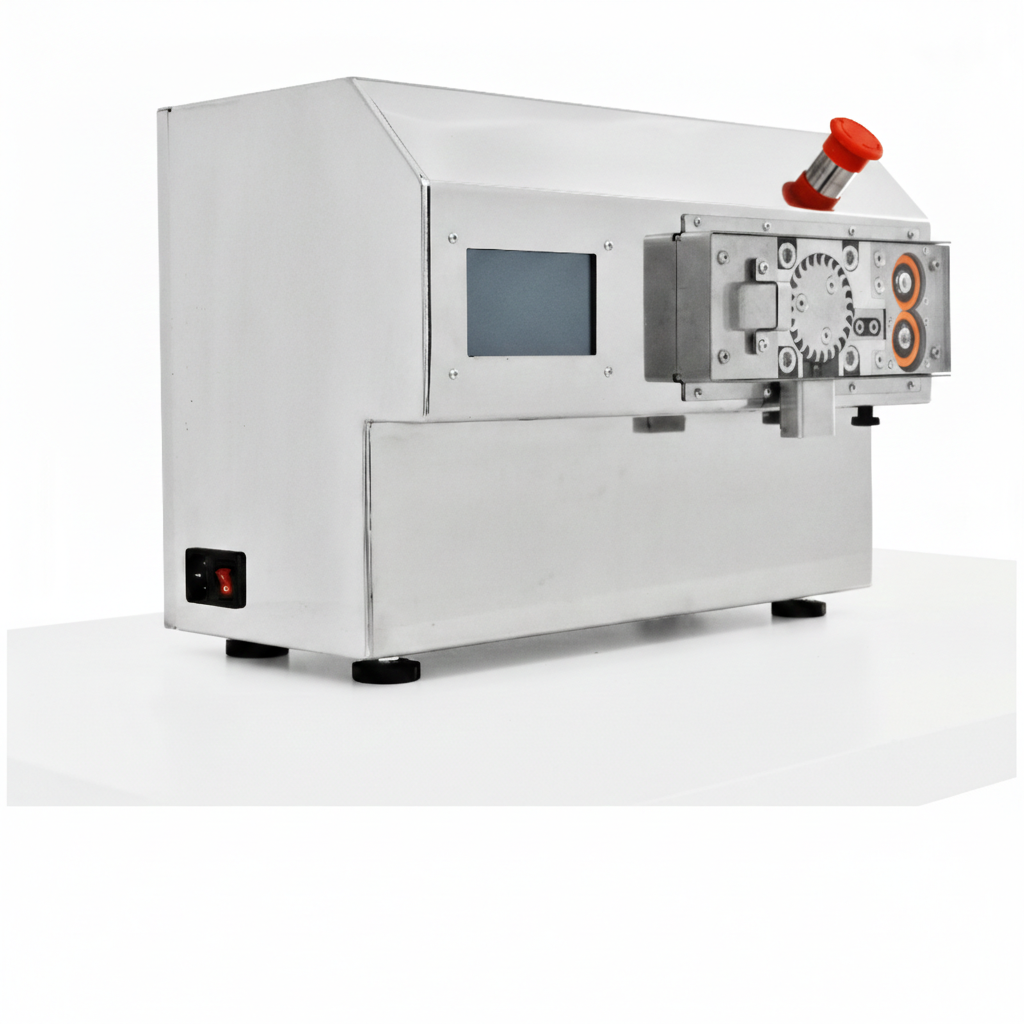
The Noztek Pelletiser converts extrudate into consistent cylindrical pellets — enabling a compounding-then-extrude workflow that significantly improves dispersion quality in composite and blended formulations.
The Compounding Gap
For most research applications, the standard desktop extrusion workflow runs from dry-blended polymer and additives directly to filament. This shows its limitations when the formulation involves fillers, fibres, or multiple polymer components that require thorough mixing before the melt can be drawn into filament. Industrial composite production uses a two-stage process: compounding followed by a separate extrusion step, with the compound pelletised between stages. Desktop research labs have historically lacked pelletising capability to replicate this workflow.
What the Pelletiser Does
The Noztek Pelletiser takes the extrudate from a desktop extruder and converts it into cylindrical pellets of defined length. Pellets of consistent length drop into a collection tray. This capability enables the compounding-then-extrude workflow at desktop scale. A composite formulation is first compounded and pelletised, then fed to the extruder for a second processing pass — during which the improved dispersion from compounding translates to better filament quality.
Applications Where Pelletisation Adds Most Value
- Carbon black-loaded conductive composites: CB dispersion is highly sensitive to mixing history; double-pass processing significantly improves conductivity uniformity
- Multi-component polymer blends: Achieving phase morphology control in immiscible blends requires the mixing intensity that pelletisation-mediated reprocessing provides
- Nano-filler systems: Graphene, carbon nanotubes, and clay nano-platelets all require high shear mixing for deagglomeration
- Colour masterbatch: Pigment dispersion quality directly affects print appearance; double-pass processing improves colour uniformity